


Haitian agribusiness at a crossroads: between food dependence and productive sovereignty
29 July 2025

Haitian agribusiness at a crossroads: between food dependence and productive sovereignty
“Haitian agribusiness is a fundamental pillar of the national economy,” stressed Junior International Prospecting Officer Yves Harry Deslouches in a strategic report commissioned by the CFI's Investment Promotion Directorate (DPI). And yet this pillar rests on fragile foundations. Despite contributing 20 to 25% of national GDP and employing more than 2.5 million people, or 50% of the labor force, Haiti's agricultural sector remains paradoxically dependent on massive imports of staple foods.
Rice: a symbol of dependency
The case of rice is telling. Haiti produces about 120,000 tonnes of rice per year, barely 25.5% of its national consumption (470,000 tonnes). The rest (some 350,000 tonnes) is imported, representing a market estimated at between USD 150 and 200 million per year. Yet “this chronic food dependency is an anomaly in a country endowed with fertile land and strong productive potential,” Deslouches points out.
According to the report, prepared under the supervision of the Promotion Directorate, modernizing the Artibonite Valley, the heart of Haitian rice farming, could boost productivity by 30% through modern rice mills, hybrid seeds and smart irrigation systems.
Cocoa and coffee: untapped wealth
Haitian coffee, grown in the highlands of the South-East and Centre, enjoys international recognition. Yet of the 20,000 tonnes produced each year, barely 14,000 are exported, mainly by one company with a turnover of USD 10 to 15 million. The global specialty coffee market, which is growing by 7% per year according to the International Coffee Organization (2024), therefore remains largely untapped by Haiti.
The same is true for cocoa. A cooperative in Grand'Anse has shown the way: by exporting 100 tonnes of certified organic cocoa in 2023, it tripled its revenue, from USD 200,000 to USD 600,000, and created 200 jobs. If this experience were replicated on a large scale, exports could reach USD 20 million by 2030, compared with USD 1 to 2 million today.
Logistics challenges: the invisible enemy
So why doesn't Haiti export more? The answer is simple: getting the harvest to market. According to the DPI report, post-harvest losses reach up to 40% for mangoes or breadfruit, due to a lack of storage infrastructure and passable roads. On top of this come transport costs, which can account for up to 30% of the total cost of a processed agri-food product.
“A fleet of refrigerated trucks, combined with the rehabilitation of rural roads, would be a game changer,” the report states. The cost? About USD 10 million. But the return on investment, according to CFI-Invest Haiti experts, could reach 20 to 25% within five years.
Toward productive sovereignty
For Yves Harry Deslouches, “the goal is not only to export, but to achieve productive sovereignty by gradually replacing imports.” This means processing locally, creating integrated value chains, certifying products and conquering niche markets (organic, fair trade, gluten-free) in the United States, Europe, Japan or Dubai.
CFI Communication Unit
Latest Publications

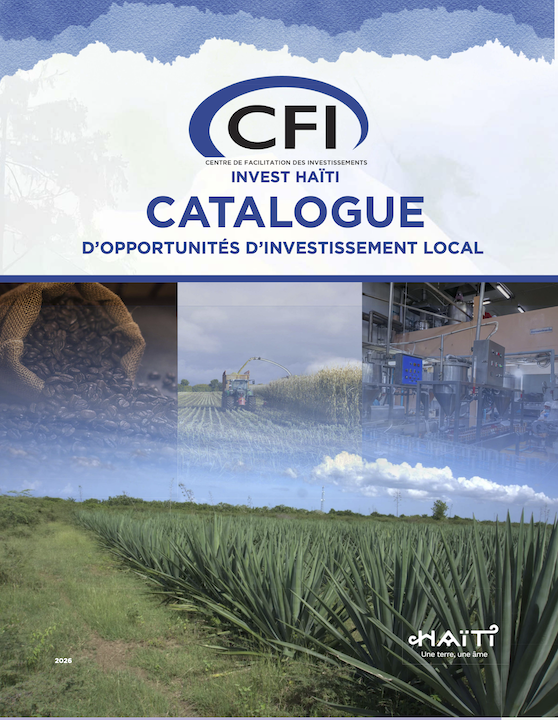
Catalogue of Local Investment Opportunities



The CFI strengthens Haiti's presence among Japanese investors
Share the article


