


Speech by Mr. Guy Lamothe, first Director General of CFI, on the occasion of the institution's 20th anniversary
3 September 2026
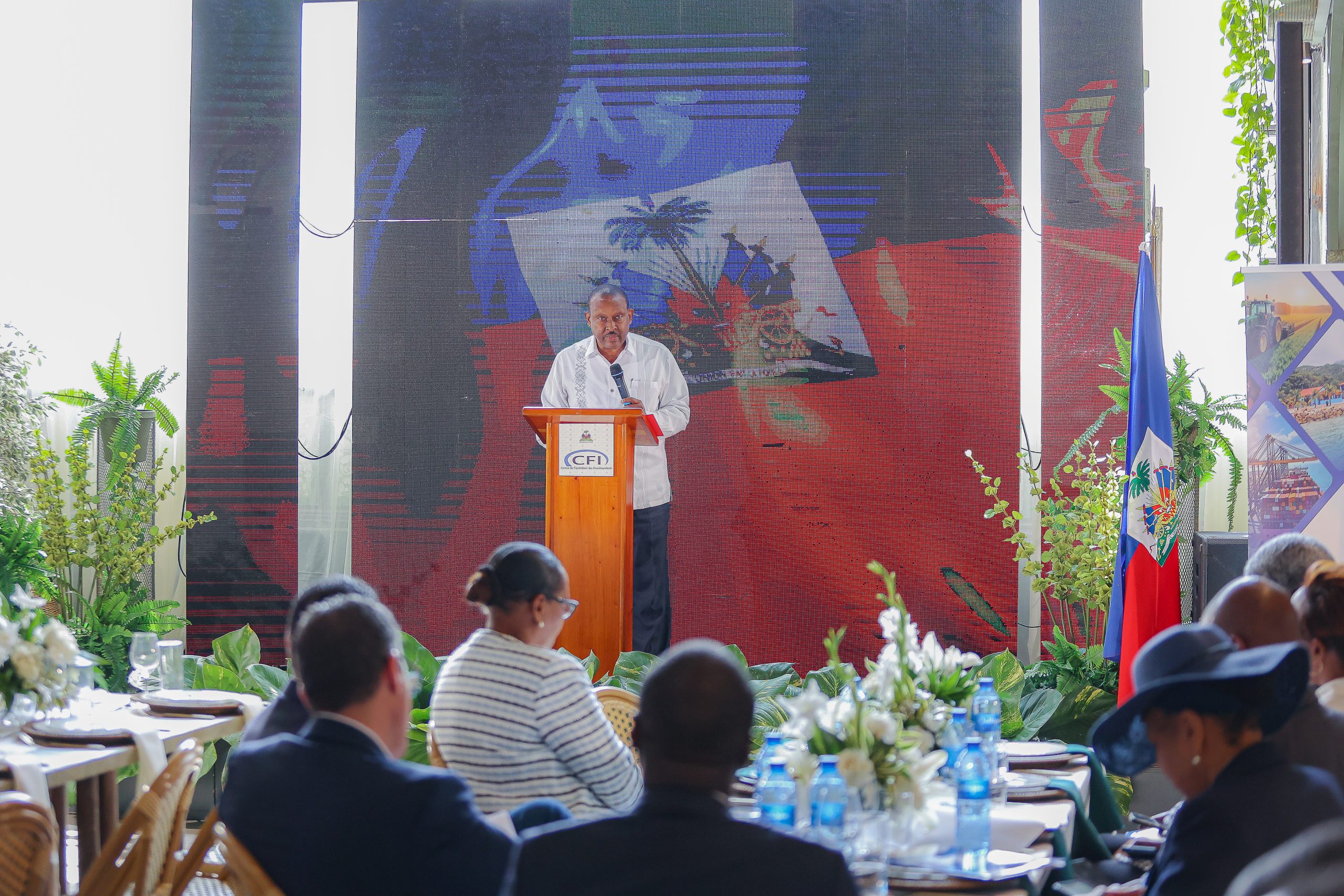
Speech by Mr. Guy Lamothe, first Director General of CFI, on the occasion of the institution's 20th anniversary
Madam Minister of Planning and External Cooperation;
Mr. Minister of Commerce and Industry;
Madam Director General of the Centre de Facilitation des Investissements, whose kind attention toward me today I particularly appreciate;
Ladies and Gentlemen, Directors General of the Ministry of Economy and Finance, SONAPI, the Haitian Institute of Statistics and Informatics, the General Inspectorate of Finance, the tourism sector and the free zones;
Ladies and Gentlemen, partners from the private sector;
Dear friends of the CFI;
Distinguished guests,
Thank you for giving me the floor on the occasion of the celebration of the 20th anniversary of our CFI.
For me, this anniversary is not merely a commemorative moment. It has an institutional, political and deeply collective dimension.
In 2006, when the CFI came into being, our country, Haiti, was facing a well-known reality: an urgent need for investment, but also an uncertain environment for those who wished to get involved and start businesses.
The creation of the CFI was therefore not simply an administrative act. It was a deliberate political choice: to make investment a structuring instrument of development and to enable the Haitian State to engage with investors in a more professional manner.
It was also a matter of breaking with an old mindset, whereby investors had to fend for themselves in a complex system, while the administration all too often operated in silos.
A vision based on three principles
As the first Director General of the CFI, heading a board of directors made up of representatives of the public and private sectors, our vision rested on three fundamental principles.
The first was institutional credibility, that is, the need to inspire investor confidence.
The second was smart intermediation: the aim was not to replace the ministries or competent institutions, but to coordinate, translate and streamline relations between the various stakeholders.
Finally, the third principle naturally concerned the national interest. Investment had to create jobs, structure value chains and strengthen national capacities.
As with any institution-building effort, we had also identified a number of constraints which, for us, served as a true institutional school.
We worked in a difficult context, marked in particular by an incomplete legal framework, lengthy procedures, an administrative culture that was sometimes not very service-oriented, and political instability.
But these constraints proved to be a true school of governance.
For building an institution in Haiti does not mean importing a turnkey model. It means adapting it, negotiating, training and persevering.
And as in any institutional and political process, change sometimes meets resistance, particularly when it involves a profound transformation of institutional culture.
At first, not everyone necessarily understood the dynamics of the change we wanted to bring about.
We encountered resistance within the State, but also in the private sector.
Some regarded the CFI as just another agency. Others saw it as a player likely to shake up certain habits and demand greater transparency.
Yet the CFI was never an institution created against the public administration, and it still is not today.
It is an institution that aims to make the investment ecosystem more predictable, better coordinated and more efficient.
We were engaged in a cultural reform: moving from a logic of fragmented control to a genuine logic of economic public service, for the benefit of the country.
Private sector support and the challenges encountered
Nor do I forget the support of the private sector.
Allow me to mention one of its players: Hôtel Montana which, in a fine show of solidarity, had offered us a space so that we could be closer to investors, modeled on certain experiences observed in Singapore and the Philippines.
Unfortunately, the January 12 earthquake interrupted this momentum.
The opening of this space was scheduled for January 30, but the January 12 earthquake also destroyed our main office, located near the Ministry of Commerce, at Champ de Mars.
Despite everything, important foundations had already been laid.
Indeed, Madam Director General has just mentioned them.
Twenty years on: an institution that has stood the test of time
Twenty years on, the CFI has become an entry point and a reference for investors.
At the time, we used to say that it should become the “landing point” for all investors and all investments in Haiti.
The CFI has also helped structure the dialogue between the public and private sectors.
It introduced a new approach within the public administration: facilitation as a profession, as a skill and as genuine public engineering.
In several sectors, this approach has significantly reduced case processing times.
The projects supported have also contributed to the creation of several thousand formal jobs, particularly in industry, services and economic activity zones.
I would point out that Ms. Prophète herself has just described these various achievements.
Today, 20 years later, the CFI is no longer a new institution.
It is a proven institution, albeit one facing an even more complex environment.
The challenges have evolved.
Investment must henceforth be more territorially targeted, more sustainable, better aligned with public policies and more attentive to human capital development.
The CFI does not need to be reinvented.
It needs to be consolidated, modernized and protected.
Protected from short-term pressures, from personalization and from anything that could divert it from its true mission.
Institutional continuity: a strong political choice
What would I like to say to public decision-makers?
Institutional continuity is a strong political act.
We have seen it: a country does not develop by constantly starting from scratch.
Without strong economic institutions, there can be no true sovereignty.
To technical and financial partners, I would also like to convey this message: the challenge is not only to multiply projects, but also to consolidate the institutions that enable these projects to be viable and sustainable.
Supporting the CFI means strengthening our national capacity to turn investment into real development.
And to investors, who are essential players in this dynamic, I would like to say this:
Haiti is certainly not a country without constraints.
But an attractive country is not necessarily a country without constraints.
It is above all a country where constraints are clearly identified, acknowledged and managed.
A message to the CFI's leaders
Finally, to those who lead the CFI today, I would like to address a special message:
Make competence your first line of attack and your first line of defense.
A strong institution does not necessarily make a lot of noise.
It stands the test of time.
And the CFI has stood the test of time.
In 2006, we sowed.
In 2026, the CFI is still here and is reaping the fruits of what has been built.
This deserves to be recognized, respected and strengthened.
I therefore wish the CFI not only a long life, but above all renewed relevance, in the service of Haiti's economic development and our country's future.
Thank you for your attention.
Latest Publications
Catalogue of Local Investment Opportunities
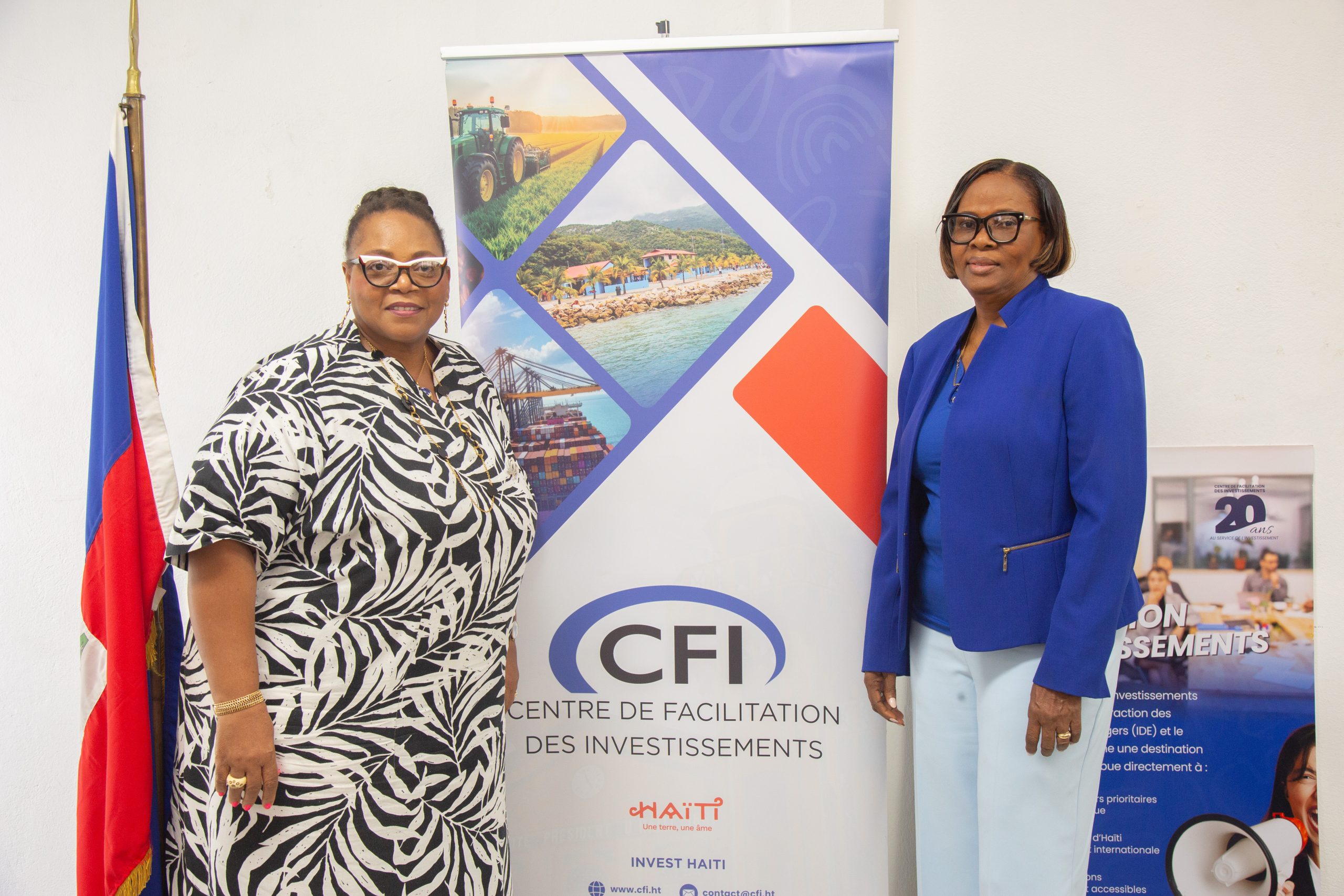
The CFI strengthens Haiti's presence among Japanese investors
Share the article


