


Reb Lokal: the company restoring value to local harvests
19 May 2026

Reb Lokal: the company restoring value to local harvests
In Jérémie, a company with modest beginnings is a reminder that in Haiti, wealth does not lie dormant only in the fields. It is also reborn in the workshops where the flavor of the land, the taste of home, is processed, packaged and put back into circulation. The company Reb Lokal is behind this vision, which is now becoming a benchmark in the region.
In Grand'Anse, some companies move forward without fanfare. They do not always make the headlines, but they are already shifting a crucial line: the one that separates the lost harvest from value regained. It is in this discreet space that Reb Lokal has made its mark, betting on processing on site what Haitian land continues to offer, despite the upheavals of the times.

Founded in 2020 by agronomist Rebetha Charles, this SME started out in a kitchen, with banana chips as its first product. “We started small, with almost nothing, but with the conviction that our local products had immense value,” the entrepreneur recalls. “From the outset, our goal was clear: to process what the country produces and show that Haiti can create quality from its own resources.”
The winning bet of “buying local” in Haiti
Since then, the initial gesture has grown. In 2026, Reb Lokal is presented as a strong organization with more than fifty processed products and some fifteen direct jobs. The company's website now showcases a range drawn from local harvests, such as roasted coffee, chocolate balls, dried ginger, peanut butters, chips and other derived products. On top of this comes a stated commitment to 100% local products, free of artificial additives, prepared according to hygiene and safety standards claimed by the brand. “Every product tells part of the story of the Haitian terroir,” explains Rebetha Charles. “We want consumers to find in our products the taste of the country, but also a certain pride in buying local.”

This focus is anything but anecdotal. In the Greater South, breadfruit, an abundant and strategic crop, can suffer up to 80% post-harvest losses due to a lack of suitable logistics, equipment and processing. In a country where more than 5.8 million people still live in acute food insecurity, saving a raw material from loss and converting it into flour, chips or a finished product is as much an economic act as a form of resistance. Each local processing unit thus becomes a modest but real barrier against waste and discouragement. “When a product rots for lack of outlets, all of the farmer's work disappears,” the founder points out. “Processing locally creates value, but it also protects efforts, incomes and sometimes even the dignity of entire families.”
This is also the message publicly conveyed by the Centre de Facilitation des Investissements. The institution presents agribusiness as a necessary bridge between food dependency and productive sovereignty: processing on site, structuring value chains, certifying products and targeting more formal markets. In 2026, CFI-InvestHaiti reaffirmed its commitment to identifying and promoting opportunities specific to the South and Grand'Anse. From this perspective, Reb Lokal is more than just a nice example. The company embodies one of the most concrete proofs that local processing can still open up an economic horizon for the real country. “We don't just want to sell products,” insists Rebetha Charles. “We want to take part in a more rooted economy, where producers, processors and consumers move forward together.”
The key word: resilience
The picture would be incomplete if the difficulties were left out. In Haiti, the fabric of small and medium-sized enterprises remains fragile. As early as 2018, CFI-InvestHaiti noted that 58% of the MSMEs surveyed were not registered, and that access to electricity, water and financing was among the main obstacles. Yet in Grand'Anse, these businesses accounted for 2,407 recorded jobs. For an organization like Reb Lokal, the next step therefore lies in consolidation: consistent quality, traceability, packaging, compliance and the ability to last in a still turbulent environment. “Every step requires sacrifices,” the entrepreneur acknowledges. “But we have learned to keep going despite power cuts, transportation difficulties and economic constraints. Resilience has become a daily discipline.”

But this is precisely where hope becomes credible. On its website, the company showcases producers and cooperatives who say they are finally finding more reliable outlets for their harvests of bananas, cassava and other local products. This may seem modest on the scale of a national crisis. Yet in Jérémie, every harvest saved from waste, every raw material processed on site, every local product put on the shelves tells a story that goes beyond mere trade: a way of holding on, of creating without giving up, and of showing that the country can still rise again through what it produces itself. “We still believe in the potential of this land,” says Rebetha Charles. “As long as there are producers, young people ready to work and consumers attached to local products, there will be hope.”
And perhaps this is Reb Lokal's greatest victory: a reminder that, at the heart of crises, difficult roads and economic fragility, there are still hands in Haiti that sow, process and build. In Jérémie, amid the scents of cocoa, cassava and breadfruit, a small local industry thus continues to write, far from the turmoil, a discreet yet precious lesson for the future: that of a country that can still draw from its own soil the resources for its rebirth.
To contact Reblokal:
11, Rue Brouette, Jérémie, Grand'Anse
contact@reblokal.com / www.reblokal.com
CFI Communication Unit
Latest Publications

Catalogue of Local Investment Opportunities


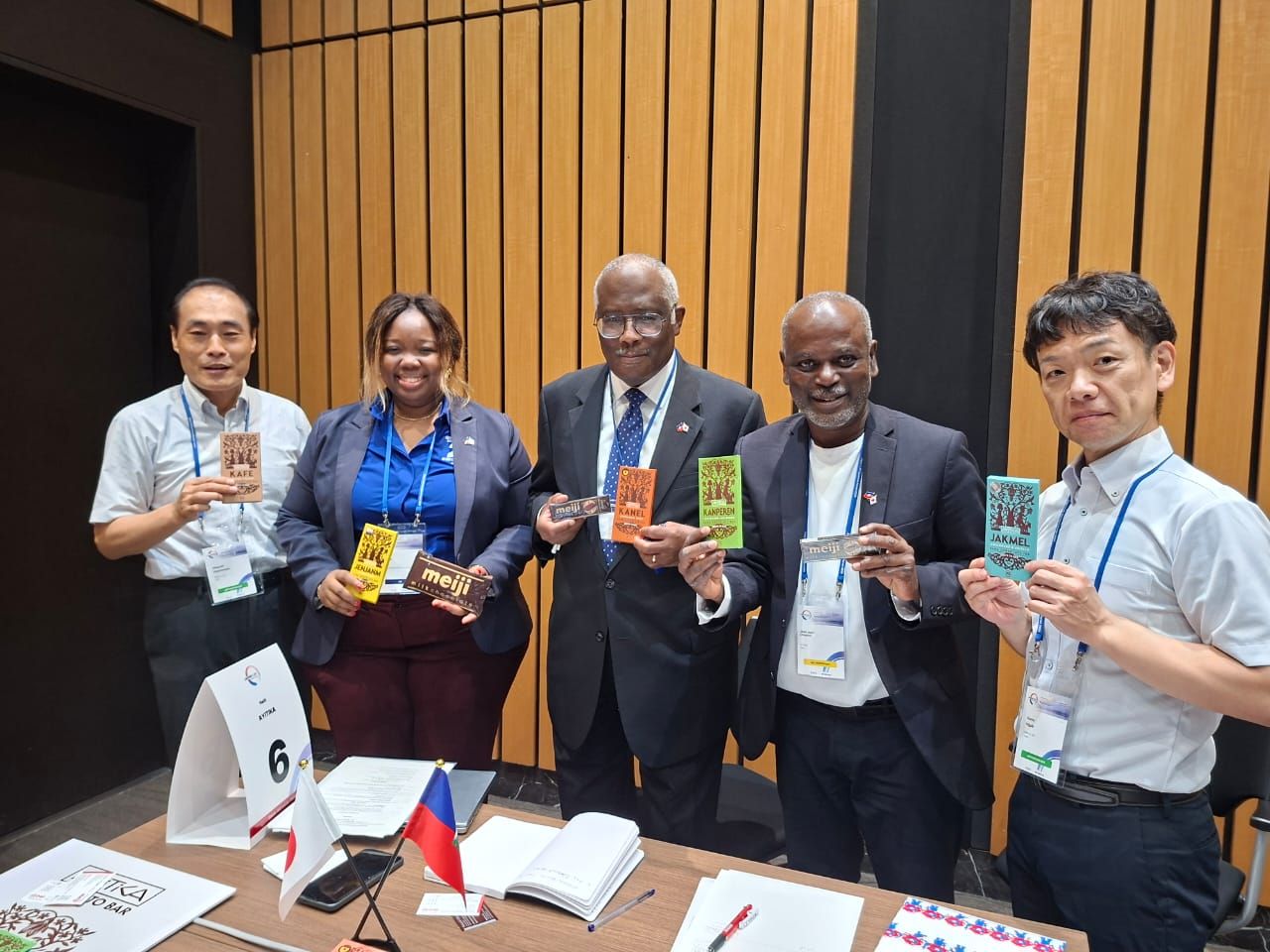
The CFI strengthens Haiti's presence among Japanese investors
Share the article


