


Three promising avenues to diversify foreign investment
10 October 2025

Three promising avenues to diversify foreign investment
With the expiration of the HOPE/HELP program, which long supported Haiti's textile sector, the country urgently needs to diversify its economic appeal. In its 2023-2027 strategic plan, the Centre de Facilitation des Investissements (CFI) has identified three particularly promising sectors for exploration that could reshape the national economic landscape: Business Process Outsourcing (BPO), renewable energy and the blue economy, including sustainable tourism.
Business Process Outsourcing: An untapped potential
A dormant sector despite major assets
The BPO and call center sector represents huge, largely untapped potential in Haiti. Despite the strategic decision taken some ten years ago to make this field a national priority, the country today has only two operational call centers, including Digicel's. Meanwhile, the leading global operators have invested massively in the Caribbean region and Central America, opportunities Haiti has failed to seize.
Unique competitive advantages
Yet Haiti has considerable assets to become a leading regional BPO hub. Its geographic location makes it an ideal “nearshoring” destination for North American markets, in the same time zone. The country has a pool of multilingual professionals fluent in French, English, Spanish and Creole – a unique advantage in the region.
Even more significantly, Haiti is the only French-speaking country in the Caribbean, placing it in a privileged position to host service centers for large French-speaking companies in Quebec, Canada, Europe (France, Switzerland, Belgium) and the French West Indies.
Labor costs are among the most competitive in the region, with flexible labor legislation that allows overtime and night work. The 2002 Investment Code offers a very attractive package of incentives: full income tax exemption for 15 years (followed by a partial exemption over 5 years), exemption from customs duties on equipment imports, repatriation of 100% of capital and profits, and accelerated depreciation of technology assets.
Infrastructure already in place
The country already has the necessary infrastructure. The Metropolitan Industrial Park (PIM) in Port-au-Prince, located 4 kilometers from the port and less than 1 kilometer from the international airport, offers integrated services. The Caracol Industrial Park (PIC) in the North covers 250 hectares, with internet connectivity and an independent power supply. The CODEVI industrial free zone in Ouanaminthe, on the Dominican border, offers the same facilities.
Telecommunications infrastructure supports 4G broadband connections thanks to the expansion of fiber optics. In addition, STARLINK and SWARM, SpaceX's satellite internet giants, have recently been authorized to deploy their services in Haiti, ensuring the availability of the broadband this industry requires.
Renewable energy: The power of the tropical sun
An energy sector ripe for transformation
Haiti faces a chronic energy crisis. The electricity supply is low and unreliable, considerably hindering economic development. Paradoxically, this situation represents an exceptional opportunity for investors in renewable energy, particularly solar power.
Exceptional solar potential
The country enjoys almost constant sunshine throughout the year, a considerable natural asset for the development of photovoltaic energy. The regulatory framework was modernized with the creation of the National Energy Sector Regulatory Authority (ANARSE) in 2016, which regulates all electricity generation, transmission, distribution and sales activities.
To encourage investment, the government may grant specific financial, tax and customs benefits to operators in the electricity sector, tailored to the nature of the specifications, the level of investment and grid modernization work.
Inspiring models to follow
Countries with similar characteristics have demonstrated the viability of this approach. Morocco built one of the world's largest solar farms in Ouarzazate, producing 580 MW, which became fully operational in 2018. New Caledonia has also made the strategic choice of solar energy, considerably reducing its dependence on fossil fuels while lowering its greenhouse gas emissions.
For Haiti, large-scale solar development would not only resolve the energy crisis but also align the country with the United Nations Sustainable Development Goals (SDGs), thereby strengthening its appeal to international investors who are sensitive to climate issues.
Blue economy and sustainable tourism: Making the most of 1,500 km of coastline
An innovative approach to development
The blue economy is a major pillar of Haiti's development strategy. Based on the sustainable and eco-responsible use of marine and freshwater resources, it opens up value-creation opportunities in a wide range of sectors: aquaculture, fishing, tourism, maritime transport and construction.
Fishing and aquaculture: Rich waters to develop
With 1,535 kilometers of coastline and a continental shelf of 500 km², Haiti ranks second in the Caribbean after Cuba in terms of coastline. The country has nearly 20,000 hectares of natural and artificial bodies of water, offering considerable potential.
Marine fishing could generate around 100,000 jobs, mainly in coastal areas. However, practices remain largely traditional and little modernized, with a national fleet of only about 300 vessels. The opportunity lies in developing deep-sea fishing and industrial aquaculture using modern technologies and meeting international sanitary standards, particularly for exporting products such as spiny lobster to regional CARICOM markets.
Responsible tourism: The alternative to mass-market resorts
Haiti's tourism sector has very limited installed capacity, with around 3,000 hotel rooms, three-quarters of which are concentrated in the capital. Cap-Haïtien, the country's second economic hub and main heritage tourism site, has fewer than 500 rooms in total.
Rather than simply copying the model of the large all-inclusive resorts of the Dominican Republic or Jamaica, Haiti can set itself apart by developing a responsible, "environmentally friendly" tourist destination. Its 1,500 kilometers of unspoiled, fine-sand beaches offer exceptional potential for eco-lodges, villas and bungalows that blend with the landscape, use renewable energy and protect the marine environment.
This sustainable approach to tourism meets the growing expectations of international travelers seeking authenticity and responsible practices, while preserving the country's fragile ecosystems.
Innovative maritime transport: A new way to connect the islands
The Caribbean archipelago suffers from a major maritime connectivity problem. Haiti can seize this opportunity by developing coastal shipping and ferry transport solutions, particularly with innovative and environmentally friendly technologies.
Solar water taxis for river and coastal transport, already used successfully in cities such as Valdivia in Chile, are perfectly suited to Haiti. These solutions would help fill the gaps in passenger and freight transport while taking advantage of the country's year-round sunshine. Such initiatives would ease pressure on often poorly maintained road infrastructure, reduce congestion and limit greenhouse gas emissions.
The international private sector is already interested in this region. French company CMA CGM recently launched a regular service linking Mexico, Jamaica and Puerto Rico. Mexican company Griver is also entering coastal shipping in the same area, adding Cuba to its routes. Haiti could become a strategic hub in this expanding network.
Connectors and assembly: A gateway to technology
An accessible, high-potential sector
Connectors and electronic component assembly represent a strategic sector for Haiti to explore. These relatively simple assembly processes (plug-and-play type) do not require a highly skilled workforce, unlike the manufacture of memory cards or software development, which require specialized engineers.
A springboard to innovation
This industry, well established in the region since the 1990s, is generally located in industrial free zones because the components are intended for re-export. It helps diversify the industrial base while creating jobs for the middle segments of the population.
The presence of such industries in the national labor pool provides fertile ground for gradually acquiring and developing more advanced technical skills. Over time, this would enable the country to meet broader needs of the IT and electronics industries, paving the way for a gradual move up the value chain in Haiti's technology sector.
An urgent and necessary diversification strategy
With the expiry of the HOPE/HELP program and the structural challenges facing the country, diversifying the Haitian economy is no longer an option but a vital necessity. The three innovative sectors presented – BPO/technology, renewable energy and the blue economy – offer concrete and realistic development opportunities.
These sectors share several common advantages: they leverage Haiti's natural and human assets, respond to current global trends (nearshoring, energy transition, responsible tourism) and align with the Sustainable Development Goals. Above all, they help reduce excessive dependence on the textile sector, which has shown its vulnerability.
The success of this diversification strategy will depend on the ability of Haitian institutions, including the CFI, to structure an attractive offering, actively prospect international investors in these sectors and create a stable, business-friendly environment. The basic infrastructure already exists; what remains is to create the conditions of trust and security needed for these innovative sectors to transform the Haitian economy for the long term.
Latest Publications

Catalogue of Local Investment Opportunities
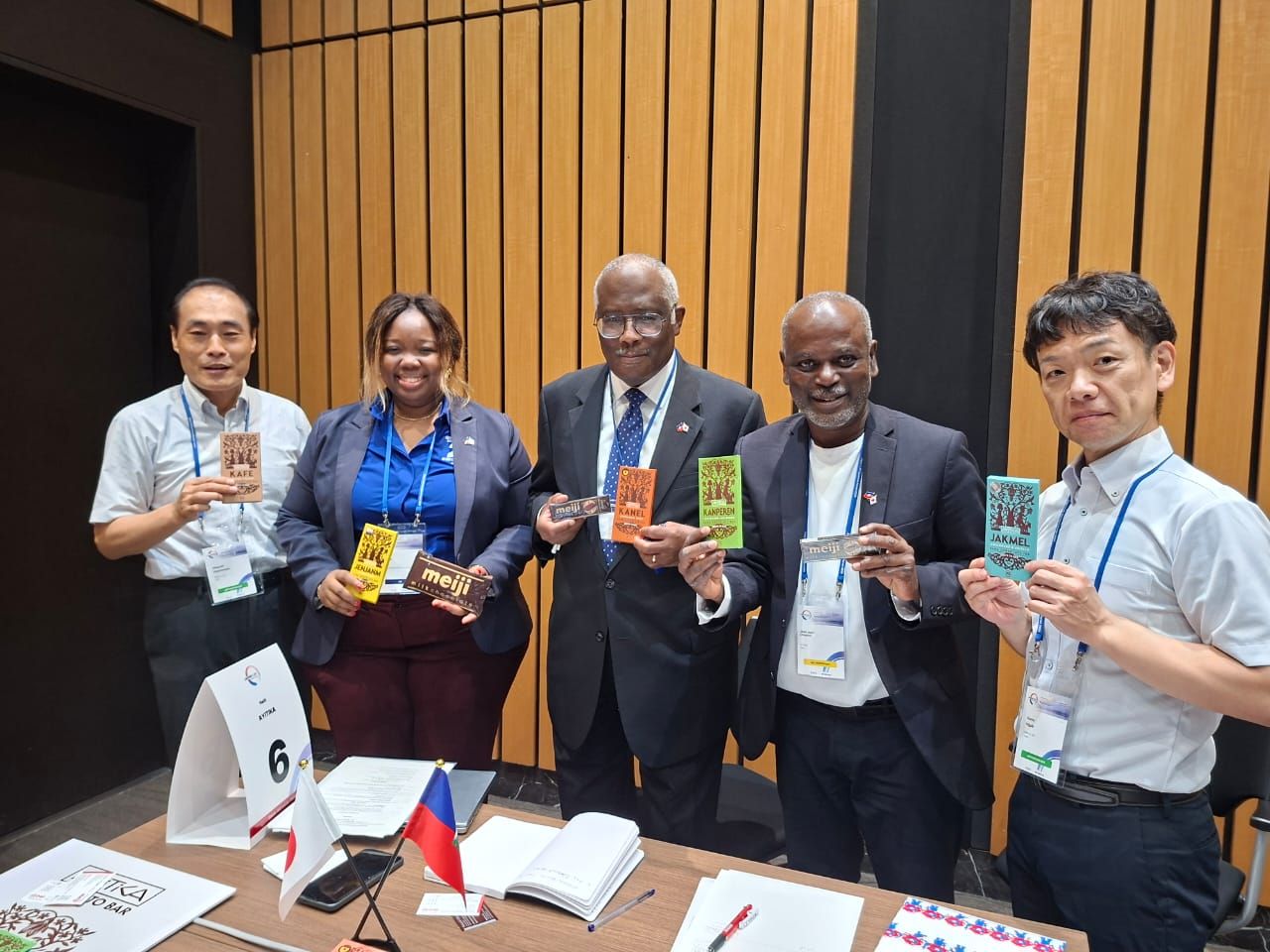
The CFI strengthens Haiti's presence among Japanese investors
Share the article


